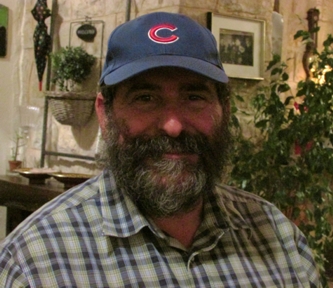
 Rabbi Mordechai Weiss
Rabbi Guide
From the Rabbi ...
August 2014
Speaking as a licensed Israeli tour guide, this has been a really tough summer for practically all of us in the Israeli tourism industry.
One one hand, for those of us who have been in this business already for a while, we know only too well the cyclical nature of what we do for a living.
It's the nature of the beast. When times are good, grab whatever work you can, whenever you can. Because inevitably, there will be slow times,
as now, as in the past, and as in the future.
It would be an understatement to say that that this has been a really, really tough summer for all of us living here in Israel.
It started with the kidnapping/murder of Gilad, Naftali and Eyal, May G-d avenge their blood. The discovery of their bodies,
the rioting in Jerusalem and throughout the country. Missiles fired at us from Gaza, one rocket falling just yards from my family
as we were driving along the highway outside Jerusalem. Operation Protective Edge which when it first started we hoped would be completed in just a matter of weeks.
Reservists, our neighbors, being called up for duty. Flight cancellations. And still the sirens wail.
And of course, the deaths. Too many. The soldiers who died while serving in the line of duty, the parents and the innocent children traumatized by the sirens and killed with the rockets.
And on top of all this chaos, and all the work cancellations I endured, I also suffered a great personal loss recently with the death of my father ob'm at the age of 79.
And today I received the tragic news of a neighbor of ours, a young mother, who drowned saving her children from drowning.
It's been a really tough summer, to say the least.
And so to you my fair weathered tourist, who cancelled your long planned summer vacation to Israel due to the situation, I bear no grudge.
How could I! Why after all should you spend your hard earned dollars (no breaks from the airlines or hotels) to travel to a place which was being depicted by CNN and company
as a place where Armageddon was imminent. Why celebrate a Bar Mitzvah in a place under fire when you can celebrate it safely somewhere else,
like in Europe or the U.S.. I know first hand of the pressures you were being subjected to from friends and family to postpone your trip to another time.
And so you did. When things eventually quiet down you'll be back. We'll be here for you, and you'll be there for us.
But to you my dear, dear friend, who despite your apprehensions you braved through it all and travelled here anyway; despite the dire warnings,
despite the sirens, despite the falling rockets, despite the hot weather, despite the (some) rude Israelis, despite the high prices, despite CNN,
despite what your family and friends said, you came anyway!
To you I can only say, that that's the sign of a true friend. The friend that shows up when times are tough.
"True friends are placed together for the purpose of accomplishing great achievements that help others."
July 2014
Well, unless you have recently returned from some extra-terrestrial journey, you are probably well aware of the present goings on here in the Holy Land of Israel. Many of you have expressed your concerns which is deeply appreciated.
I assure you that albeit a bit shaken, we are all alive and well and continuing on with our daily lives, as best as possible considering the situation.
Because of your concern, I am writing to describe our own personal experience during this time.
First of all, I have no work this week, hence the time to sit down and write this e-mail message to you. Thank G-d I enjoy a good reputation in the world of tour guiding in Israel which keeps me busy most of the time.
One aspect of our business here is to grab all work you can when it comes your way, because you never know when those opportunities will suddenly dry up.
It's actually a good sign of sorts that I received a few cancellations due to the present security situation. Fortunately it means that I am busy to begin with!
Cancellations obviously don't have much of an impact on Tour guides who aren't working to begin with. So I have this full week to spend with the kids, change some light bulbs in the house and other stuff like that.
I am scheduled to begin a 10 day Birthright group arriving from London next Sunday. And so far it remains a go. So a little breather beforehand is a good thing.
The Summer season got off to a really lousy start with the kidnappings and murder of three Israeli teens on their way home. Then was the rioting and now of course the sirens and rockets.
I attached the precautions we received from the powers that be, just to give you a taste of what goes on here.
The kids are in summer camp, and all their camp trips have been cancelled. That's a bummer. And on Thursday, we saw a rocket fall just to the side of the road while on our way home. That was scary.
One day we'll all be able to laugh about it. Not just yet. And the tourists I was guiding last week in Jerusalem did not in any way enjoy seeking shelter when sirens went off. But we still managed to enjoy a great time.
So here is the bottom line. This is already our 12th summer since making aliyah. When we arrived in 2003 suicide bombing was all the rampage here. Those were the days of Saddam Hussein, buses being blown up and gas masks. And who can forget Lebanon war number 2 in 2006.
And still, life goes on. Let me give you a for instance. At the end of the school year, a special end of the year program was organized by the school. It was an opportunity for the school to show off the accomplishments of the students,
not the academic accomplishments but the result of the extra-curriculum stuff sponsored by the school, stuff like taekwondo and dance.
We had both a first and fifth grader performing, Menucha and Nechama. Honestly, Ellie was not looking forward to sitting through another stretched out school program (in Hebrew!) without my company (I was busy at work), but ...
What Ellie saw made such an impact on her. The kids were great. The dancing was spectacular. But two things made the greatest impression on her.
First, that the school should invest so heavily in programs that truly round out the educational experience for the children. Who can even begin to imagine what the cost for these type of programs would be back in the States.
And here it is something offered as part of the school program. Very, very impressive.
But was even more impressive was that a child with Downs Syndrome, who back in the States would have been "Sinai'd, resource room'd, labeled, etc was totally accepted by her classmates (and the system!), participating in the dance just like any other of her classmates.
Of course it meant extra effort on behalf of the school and on behalf of the teacher. But they made it happen. It was one of the most beautiful sights you could ever imagine seeing in your life.
And it happened here. Don't be fooled by all that stuff you are being fed on CNN or whoever. Despite the challenges we have here, and there are plenty, they still do not take away from the quality of life we and our children and grandchildren enjoy here.
And that is exactly the reason why me made Aliyah, and exactly the reason why we are here to stay.
All our love. Thank you for your blessings. Be safe.
February 2014
Today I am celebrating birthday #55. I was born on the 4th day of Adar I. My youngest sibling shares my birthday with me, just 22 years apart.
I am looking forward to the formal celebration on Thursday with my children and grandchildren.
I have another cause for celebration today. It's the 25th anniversary of my first ever trip to Israel.
The trip I took just before my 30th birthday fell into my lap. I had no true desire to visit Israel. Israel was simply not on my radar screen at the time. The trip was actually a consolation prize.
Two things happened as a result of that trip. I made friends for life, and my love affair with the Land of Israel began.
And so with 55 years of wisdom tucked under my belt, I have come to appreciate the simple but deep wisdom I once heard from Dr. Brawer of Montreal.
Life is a struggle. That's why it's called life. Death is easy. Death is about becoming one with everything.
You stop living when you stop struggling.
I believe that G-d gives us the necessary strength to overcome the struggles He sends our way, both the easier ones and the harder ones. And the ones we pray no one should have. That I learned from my Mother.
We all have our personal, daily struggles, physical and spiritual.
And then there is the struggle to survive as a People. To survive as a Nation.
And I feel so absolutely blessed by G-d that I have merited to reside in a place where those two struggles, my personal struggles and my People's struggles, merge into one.
Till 120!
October 2013
Ships That Pass in the Night
Ships that pass in the night and speak each other in passing
Only a signal shown and a distant voice in the darkness
So on the ocean of life we pass and speak one another
Only a look and a voice; then darkness again and a silence.
Longfellow - "Tales from A Wayside Inn"
So often our lives are compared to a journey of sort; by air, by sea, by land or beyond. We have by example the popular "Midrash" on King Solomon's statement in his book of Ecclesiastes; "The day of one's death is better than that of his birth."
The Midrash presents the parable of the two ships to help us understand the deep wisdom hidden in this statement of the most wise King Solomon. Two ships set out to sail upon the great ocean blue. One of them is departing from the harbor, and the second, arriving. Everyone at hand was rejoicing celebrating the great send off of the ship that was setting sail from the harbor. But over by the ship that was returning from its great and successful voyage, no one was celebrating. Quiet. Unnoticed.
A wise man observing the scene commented on the contrast: "I see a reason for the very opposite to happen. You ought not to rejoice for the ship that is leaving the harbor, for no one knows what will be its fate; how many days the ship will have to spend on the voyage, what storms and dangers it will encounter. What challenges will it confront? Will it in fact be a successful voyage? But as to the ship that has arrived safely in port, all should celebrate with great fanfare, for the ship has returned safe and sound.
The Midrash goes on to explain how that when a person is born, our natural reaction is to of course celebrate, and when a person dies, we mourn. But it should not be so. Rather, at one's birth no one has yet cause to rejoice, because no one knows yet to what future the newborn will confront. Will good or evil befall this person? However when a person dies, we all then ought to rejoice if the departed is leaving a good name, a legacy, and has gone out of this world in peace.
By definition, the idea represented by ships that pass in the night refers to a phenomena that inevitably occurs to us all too often in our lives. We may meet someone once or twice by chance for a short time and then not ever see each other again. In my way of thinking, a "short time" is relative. We form relationships, sometimes even close ones, with different people at different stages of our life only to see these relationships mostly end over time for one reason or another; it could simply be a matter of our High School graduation or the end of our college years, a change of jobs or relocating from one place to another.
True, in today's "modern" world, with all of the hi-tech social networking which is available, one can easily reconnect "virtually", if one so desires, with those people we knew in our previous lives. Still, to return to "the way it was" is rarely reincarnated. Such is life.
I recently had good cause to dwell on this concept. Throughout my life, under all types of circumstances, I have been very fortunate to cross paths with a wide range of people. And it's in my nature and maybe yours too, to sometimes wonder as to what has happened to this or that person from our past. Sometimes we may even dwell upon the cause of our departure from each other and wonder if the cause can possibly be rectified. Can we possibly reignite the relationship we once had? Sometimes it can, but more often not.
I was thinking about this recently because 10 years ago, together with my wife and children, we made Aliyah. Some of our children who came with us returned to the USA. That also happens. Sure today there's e-mail, VOIP, Skype, Twitter, Blogs, (snail mail) and what not, but it's still, obviously, not the same. Relationships, even long time relationships with friends and family, solid relationships were disrupted by our departure, even broken. It's inevitable. Aliyah is a quantum leap from your past.
We were blessed recently with the birth of 2 grandchildren here in Israel. (I confess. I celebrated!). As word spread, out of the blue, Mazal tov wishes came pouring in from so many of those other ships I have been blessed to cross with throughout my life. It was such a very good feeling. The connections we made throughout our lifetime transcended time and space.
Enjoy the journey.
Rabbi Mordechai Weiss
PS King Solomon has been in the news lately. It is believed that remains of his Jerusalem Palace have been discovered.
June 2013
What's 10 years?
Today is the 9th day of the month of Tammuz. 10 years ago today, together with my wife Ellie and our 9 children, we arrived on Aliyah to Israel.
What's 10 years? On one hand, compared to the vast history of mankind, 10 years is barely a blip on the radar screen. On the other hand, to put things in perspective, just 10 years ago we still did not have Facebook. What! No Facebook? Hard to imagine a world without it. A lot can happen in 10 years.
Each and every day is created anew. Which is exactly how I feel about these past 10 years.
As it happens, the 9th of Tammuz has great significance in Jewish history. On this date in 586 BCE the army of Babylon broke through the city wall of Jerusalem which ultimately led , exactly one month later on the 9th of Av, to the destruction of the Holy Temple built by King Solomon some 400 years prior. The date was commemorated annually as a day of fasting until 70 years later, with the rebuilding of the Second Temple by the returning exiles, the date became a day of celebration instead.
After the destruction of the Second Temple by the Romans in the year 70, the day ceased to be a day of celebration, and instead was incorporated into the 17th of Tammuz, the fast day which commemorates the day the Romans broke through the wall of Jerusalem.
But for our family, the 9th of Tammuz has again become a day of celebration.
It is still hard to truly fathom the full impact of our move to Israel. But one thing is for sure. Even though there were those who placed impediments in our way, in the end, it was with the great support we received from our dearest friends which enabled this dream to come true. For this we are forever grateful.
In the past 10 years we've enjoyed births and celebrations as well as death and sorrow. Marriages and divorces. Adjustments and a crisis here and there. It hasn't always been smooth sailing, but we are thoroughly enjoying the journey.
We are looking forward to a few milestones soon. Next week, Please G-D, our son Mendel graduates High school and heads off to Hesder and Army service. He was in 3rd grade when we first arrived. Chana who was turning 3 when we arrived begins High school this year. We are so looking forward to the birth of more grandchildren this year as well. And soon our youngest, Menucha, who was born here in Israel, will begin First grade. It will be the first time in over 25 years that we will not have a child in pre-school.
I was reminiscing with Ellie recently. I commented that had we remained in Teaneck, I'd be saying that we've been there for 30 years. Her response said it all. She said she was happy to be being able to say instead that we've lived in Israel for 10 years.
We miss our family back in the US. And our dear friends. And Costco. And Yankee Stadium. And the very best Sushi.
We are so happy with the education and the lives our children are enjoying in Israel. We love our community. I feel especially blessed with my new career, meeting the wonderful people I meet as I guide them throughout Israel.
We have our health, thank G-d. Our happiness. The wonderful feeling of fulfillment. We thank G-d with blessing us with this special opportunity to build our lives in Israel.
With great optimism we look forward to the next 10 years and the next and ....
April 2013
You Can't Make This Stuff Up
One of the first pieces of advice I received upon making aliyah 10 years ago was that when I planned to travel into Jerusalem or wherever for errands, I should bundle them together to get done in a single trip. Keeping in mind the "we're not in Kansas anymore" motto, back in Jersey we'd think nothing of hopping into the car for the 2 block ride down to Cedar Lane to browse for a video tape (remember those days!), return home, and to then drive out again for a visit to CVS to pick up a picture frame.
Not here in Israel. Travelling from point A to point B can be a bit more complex than in days gone by. Public transportation has its limitations. There is no public transportation to the next largest city (Maale Adumim) from where we live (8 miles away) and the one hour bus ride to/from Jerusalem only departs every 2 hours. Hitch hiking is OK, but only at certain hours of the day.
This of course leaves you with simply driving into Jerusalem with your own vehicle, just a 20 minute drive, without traffic. The problem is the expense (We pay something like $9.00 per gallon for fuel) to say nothing of city traffic and trying to find parking.
And so, trips into the city are kept to a minimum. That's why errands are bundled to all get done in a single trip.
Let me define "errand". An errand can be a visit to the doctor, the bank, the post office, a government office. Chances are, only a percentage of those errands will be accomplished successfully. You get to the doctor's office with your child only to find out the doctor is still stuck in traffic and is running 3 hours behind schedule. That happened to me last month. Or the computers at the post office are down. Yup. Last month too. Or government employees are on strike. Or they were on strike and 631 people are in line ahead of you.
In other words, to bundle errands means to be a glutton for punishment. That's me.
So we recently purchased a 1997 Made in America Ford Tracer. The water pump on our 1993 Subaru went capute, unfortunately when I was not behind the wheel. Anyway, it was time for a new car anyway. We suffered through the entire winter without windows that would close. The Ford is great, except that it came with only one key.
I tried, unsuccessfully, to have additional copies made. I was told that only the Ford dealership in Jerusalem would be able to do it. I pushed off the inevitable until my son locked our one and only key in the car. I got the hint.
And so yesterday I bundled up all my stored errands and headed off to Jerusalem.
What was easier to accomplish? Getting a copy of the car key or closing a bank account for my son who lives in the United States?
I arrived at the Ford dealership only to be told to go to a different location where Ford does their repairs. At the repair shop, I was required to give them all my particulars (name address, etc.etc.etc.) and then told it would cost $100 and would take 2 hours. Just for a key copy! By the way, you know my other all important motto (other than keeping your sense of humor) that in Israel NO is the beginning of the conversation. Finally a mechanic was called over; he looked at the key, and said that it couldn't be done.
By the way, this was not a special electronic key. It was a simple, old fashioned car key!
The mechanic directed me to "Yaron" down the block. I found Yaron installing stereos in somebody's car. He took a quick glace and said I should return on Tuesday. When I explained that it wasn't that simple, he said I should wait 2 minutes.
A half hour later Yaron figured how to make for me 2 copies, using a different car model and destroying the electronic mechanism in the replacement key all for the pleasure of paying $20. I purchased two.
Actually, my experience at the bank went surprisingly quite smoothly. Parking was a bit of a pain, but that was expected. I signed about a dozen forms, paid about $500 but was out within the half hour.
On most trips to Jerusalem I simply park at one of the free parking facilities at the edge of the city and utilize public transportation. But I had too many errands to run yesterday to make that practical. I enjoyed an 80% success rate yesterday. I was satisfied with that.
I'm already bundling errands for my next adventure into the City.
December 2012
Something We Can All Agree On
No two people think alike. That's what makes life so interesting.
We will shortly be celebrating the Holiday of Chanukah. We are all familiar with the story of the miracle of how an oil supply enough for just one day of light for the Temple's Menorah was discovered and it miraculously lasted for eight. And so each year we light our 8 branched Menorah. But did you know that one school of Rabbis said we should light 8 lights the first night and thereafter decrease the amount each night, lighting just one the final night of the Holiday, just the opposite way of how we celebrate today!
We love those Macabees, although the Rabbis don't canonize the Book of Macabees. After all, those Hasmoneans are Priests, and should they really be taking upon themselves the mantle of Royalty?
So what do we agree on? Well, first of all, Chanukah is a legitimate Holiday, accepted by "all". The Hallel is recited, extra prayers are added to our daily services, special readings from the Torah are read daily, Blessings are recited over the lighting of the Menorah. A full fledged Holiday. And let's not forget about the food. Food fried in "oil" (of course). Potato pancakes, jelly filled doughnuts. Your choice. And gifts for some, money for others. Fun, fun, fun.
And finally. The Dreidel. Children all over the world will play this all time Holiday favorite game. My 5 year old daughter came home from Pre-school just the other day, explaining to me the meaning of the 4 Hebrew letters on the Dreidel; A Miracle Happened Here.
And of course she was correct. Well over 2,000 years ago, it was here in then Syrian-Greek occupied Judea that the great military victory of the Macabees and the Chanukah miracle occurred. And yet, my knee-jerk reaction to what my daughter said was to correct her. Fortunately I caught myself in time.
You see, for most of my life, my mind was wired to think that the miracle happened there. That's because for most of my life I have lived outside of Israel. And I used to think how quaint it was that in Israel they have a Dreidel that says here instead of there. As if my true place was there.
It took my 5 year old to open up my eyes to realize that here is where the miracle occurred. And on this we are all in agreement.
Here is we belong.
December 2012
Just about 10 years ago when we made aliyah, our son Mendel was entering 3rd grade. It was a bit of an adjustment for him at the time.
New friends. New community. New school. New language. His principal asked how it was that he could read Hebrew so, so well but not understand even a single word.
I recall our first family visit back to the USA after that. Mendel insisted on sitting in for a few hours in his former class at his former school so that he could finally say a goodbye to his former classmates.
Mendel played Baseball here for a few years (today he plays football and basketball), even representing Israel (and winning!) in Prague. And then in 7th grade, just a month shy of his Bar Mitzvah, three of his closest friends were killed tragically in a car accident. Each friend in their close knit group dealt with it differently.
Thank G-d, Thank G-d Mendel weathered it (with plenty of help). We all still weather it.
And then for 9th grade he entered a wonderful school, located in Mitzpe Ramon, just a measly 5 hour bus ride from our house. Yes, he dorms. But still. We had our hairy moments in the beginning, but here he is, already in 12th grade there, doing fantastically, just about ready to take all of his final tests. And graduate. And enter his years of army service like all the other kids his age.
So this is the time of year that 12th graders go off to try out different Army options. Typically, army service is for 3 years. Mendel for the next couple of days is checking out a "Hesder" program located in the city of Ariel. The program he's checking out actually relocated from "Gush Katif" (Gaza) after the "Unilateral Withdrawal" from Gaza in 2005. The "Hesder" program typically entails a commitment of 5 years to the army, combining both military service and studies. The bulk of "Hesder" students serve in combat units. This is what Mendel wants to do. We couldn't be more prouder of him.
On another note, a friend from Teaneck recently asked if things here in Israel were "getting back to normal". I responded in the typical Jewish fashion with a question of my own. After Sandy, was Teaneck "getting back to normal"?
Well first of all, those who were hit hardest by Sandy, loss of life, loss of property, what exactly is "back to normal"? And the same goes for here.
Fortunately for us, we were "far" from where the heat of the missiles were falling. Yes, I saw one shot out of the sky over Tel Aviv, and we had our fair share of warning sirens even in the Jerusalem area. Yes. It was scary. We were all affected one way or another. Neighbors, school teachers, husbands, sons were called up for a possible war. Very, very scary. Shimon's teacher (10th grade) was gone all week. A telling moment for me was when we were discussing the situation at the Shabbat table and someone mentioned how Israel had taken out the Military commander of Hamas. My fourth grader, Nechama, immediately chimed in - in Hebrew - "He had it coming to him!". From the mouth of a sweet, sweet 9 year old!!!!
And as expected I had my fair share of tour cancellations, although one cancellation, thank G-d, un-cancelled and will be arriving in just a few short weeks to tour Israel.
Yeah. "Normal" will be good.
Can hardly wait.
November 2012
One of the numerable Israeli expressions which occasionally gives me reason to chuckle, depending on the urgency of the matter, is "after the Holidays". In a Land which celebrates more Holidays than any other place on the face of the planet, the response of "after the holidays'' already 30 days before the commencement any given Holiday, to the query of "When will it be ready?, When will you fix it?, When will you take care of it?, When will election campaigns begin?, When will the government deal with it?, etc. etc. etc. (You get the idea) can be quite comical, if you still have your sense of humor.
I still do retain a sense of humor, which is why I found it so funny the other day while I was doing some shopping in the Shopping Mall in Maale Adumim, to hear the clerk behind the counter respond to a customer's question as to when their stuff would be ready, the response being, "After the War". And he said it so nonchalantly. That was funny (in a non-funny type of way). And so, so Israel.
You see, we made aliyah in July 2003, during the Second Intifada which lasted until 2005. Then in 2006 we had the Second Lebanon War, and then in 2008 the Gaza War. Basically, in a strange way, in Israel, we are always expecting a holiday and we are always expecting another war. (Hey! Aren't many of those holidays celebrated for winning some kind of war!? Hmmmmm. We may be on to something here. I just don't know what. But it's definitely something).
As a tour guide, economically dependent on a thriving tourism industry in Israel, my work is especially sensitive to the country's security situation. Many a guide in the past has been forced out of his/her profession due to the lack of tourism during especially troubled times. Every tour guide is very well aware of this. When times are good, they are great. And when times are bad, ... And we always know there will be another situation. The only question is, when, for how long, how bad, and when will we recover (until the next one).
I don't like it. It's scary. I am checking news updates. I hope this one is over soon. Real soon. When we heard the siren go off Friday night to warn us of a missile in the area we weren't sure what to do. (We are now.) Our 5 year old Menucha cried and was afraid to venture outdoors the next day. And that was just from one single siren! Our daughter in Jerusalem heard the siren as well. People were scooping up the kids from outside to bring them in to shelters. At 7PM yesterday I was driving in to Tel Aviv with tourists returning from a day of touring in the north. The siren went off. We immediately stopped and ran for shelter. I saw the flash in the sky overhead as Israel knocked out another rocket aimed at us from Gaza. We all heard the loud blast which followed afterwards.
School trips have been cancelled. Many fathers who serve in the reserves have been called up for service. The parking lot in front of the base not far from our home is usually empty. It's now jam packed. All kinds of armored vehicles and tanks can be seen travelling on the roads. (At least the rush hour traffic wasn't so bad yesterday!)
And you know what. This is absolutely where I want to be. Yes, we are getting shot at. Somebody wants me dead. As King Solomon stated long ago, "Nothing new under the sun". I don't like that reality, but I do prefer the reality of living as a Jew in the Jewish Homeland. And that is a reality we will always have to fight for.
Less than two hours after I saw the missile shot down last night I was with Ellie and our neighbors celebrating the wedding of our friends' children. A war is going on. Missiles are being fired. People are dying. But my kids went to school today, as usual. I have work tomorrow (Thank G-d!). Bills still need to be paid. Ellie is busy with her ever expanding day care. We are enjoying our grandchildren here (and miss those in the US). In short, we are living our lives with whatever curves G-d decides to send our way. And as the Lubavitcher Rebbe himself said about Israel, even during troubled times, that it is the safest place to be.
I truly believe that.
Visit us soon. After the war.
As written in

The Jewish Voice and Opinion
July 2008
Now a Licensed Israeli Tour Guide, Rabbi Mordechai Weiss Revels
in Showing Birthright Participants Their Jewish Homeland
Six years ago, Rabbi Mordechai Weiss
headed the Chabad House in Teaneck and directed Friends of Lubavitch
of Bergen County. Then, in 2002, he, his
wife, Ellie, and their 10 children made aliyah. Today, there are 14 Weisses (they
have had two more children, both sabras) residing in Mitzpeh Yericho, and Rabbi
Weiss is a licensed Israeli tour guide.
While he loves showing individual
tourists and families the nooks and crannies of his adopted homeland, he has
found guiding young adult participants in the Taglit-Birthright Israel program a
perfect way to put his new profession in the service of his first priority: Impacting
individuals who, more often than not, have absolutely no connection to Israel
or Judaism.
"It's an opportunity I treasure to experience," he says.
His first experience with TaglitBirthright Israel came in the summer
of 2006, just before the outbreak of the Second Lebanon War. Rabbi Weiss, in
the middle of his tour-guide course, was hired by Oranim College, a school
of education in Tivon near Haifa, to put together itineraries for Birthright groups.
To accomplish this, it was necessary to spend some time traveling with the
groups coming to Israel.
Joint Effort
Founded in 2000 by philanthropists Charles Bronfman and Michael
Steinhardt, in cooperation with the Israeli government, the Jewish Agency,
and Jewish communities throughout the
world, Taglit-Birthright Israel was created to send young Jewish adults, ages
18-26, from throughout the Diaspora on
a free 10-day trip to Israel in recognition of their birthright to the land.
There are some stipulations. Participants must be post-high school and may
not have been on any earlier organized
trip to Israel. Vacations with family do not disqualify, but participants may not
have lived in Israel after the age of 12.
To be eligible for this free gift, a
young person must be recognized as Jewish by the Jewish community or by one
of the recognized denominations of Judaism. The young person is eligible if either
parent is Jewish and the applicant does not actively practice another religion.
An Introduction
While the Birthright trips include visits to historical, religious, and cultural
heritage sites around the country, including in Jerusalem, the Negev, the Dead
Sea, Tel Aviv, and the Galilee, the tour
is not meant to offer an exhaustive education of Israel and the land. Rather, the
founders saw it as an introduction, hoping participants would be encouraged to
extend their stay in Israel or return again
on their own.
To give this overview of Israel, the
founders brought together top educators, historians, and tourism professionals to
devise logistical, educational, and security standards so that Birthright Israel
could accomplish its three major goals:
to diminish the growing division between Israeli and Diaspora Jewish communities; to enhance the sense of Jewish
solidarity; and to strengthen participants' personal Jewish identity and connection
to the Jewish people.
By any standard, the Birthright project has been a success. In many communities, the experience of participating in
a Birthright trip to Israel has become a
normative part of Jewish coming-of-age, and there is often an overwhelming
demand for spots on the trips in all the countries in which the program operates.
Spots are often filled within two days of
the beginning of registration and wait-lists are the norm.
In 2007, Miriam and Sheldon Adelson pledged $60 million to Birthright
Israel to take applicants off waiting lists
and to increase annual capacity from 25,000 to 37,000 in 2007 and 2008.
160,000
By this summer, Birthright will have spent more than $200 million on trips to
Israel taken by more than 160,000 young Jews from more than 52 countries, but
70 percent of trip participants are from the United States.
Rabbi Weiss agrees that the free trip is the key to the success of Birthright's
recruiting efforts.
"Still, more than 160,000 participants is an impressive number," he says,
pointing out that many of the young people who take advantage of the gift and
actually make the trip must "overcome
personal safety concerns and, quite often, pressure from friends and family not
to take the chance."
Sounds of War
When the Second Lebanon War broke out, he and the Hillel Birthright
group from California he was accompanying were touring Israel's northern border. On the first day of the war, the group
was enjoying "a fun-filled water hike in the Jordan River."
"Most of us were still unaware of what was transpiring only a few miles away," he says.
Not that they didn't hear the sounds of war. But, as Rabbi Weiss recalls, "the
sound of distant tank-fire is not necessarily uncommon background noise in this
part of Israel."
Nearby army bases are often involved in different training drills, he says.
Not a Drill
But this time, the continuous booming was no drill, and as news of what was
happening reached Birthright officials and the world at large, plans had to be changed
quickly. Instead of traveling to Safed, which had already been hit by Katyusha
missiles, the group decided it would be safer to spend Shabbat in Tiberius.
"As you can imagine, security is always a very serious concern on any
Birthright trip, with many precautions taken, such as providing a 24-hour armed
guard. Try to imagine what happens if a war breaks out. Security is increased in
direct proportion to the concerns of parents back in the states, worrying about
their children traveling around Israel, often for their very first time. We decided
to go to Tiberius because what ever happens in Tiberius?" says Rabbi Weiss.
But this time, on Shabbat, Tiberius, too, was hit by a Katyusha missile, which fell in the general area of the hotel being
used by the Birthright tour.
"After a real Israeli experience of spending a few hours in the hotel's bomb
shelter, the group was evacuated to Tel Aviv," says Rabbi Weiss.
From there, the trip, despite the ongoing war, proceeded as scheduled.
Not as Dramatic
Last month, Rabbi Weiss took another group of Birthright participants on a
tour which he says was "thankfully not as dramatic." It was his first opportunity to
serve as an official Birthright tour guide.
"Thank G-d, we are celebrating Israel's 60th birthday and the tourists are
coming," he says.
His says his experience with the Birthright group—youngsters from the
University of Colorado Chabad House was "indescribable, one which I will
never forget."
Official Organizers
Birthright trips are often geared for individual groups, such as graduate or
undergraduate students, especially those affiliated with the school's Hillel, and,
more frequently, the campus Chabad.
Jewish organizations which are approved by Taglit-Birthright Israel are
authorized to operate the trips. Their responsibilities include recruitment, determining eligibility, conducting interviews,
establishing the itinerary, and hiring the staff. Hillel and NCSY are among the
many organizers, which generally have representatives in the Diaspora country
and Israel.
Just recently, the Mayanot Institute of Jewish Studies in Jerusalem, a school
which attracts young Jews from around the world who wish to explore Jewish learning while experiencing Israel,
teamed up with many Diaspora campus
|